
Build layers instead of relying on instinct
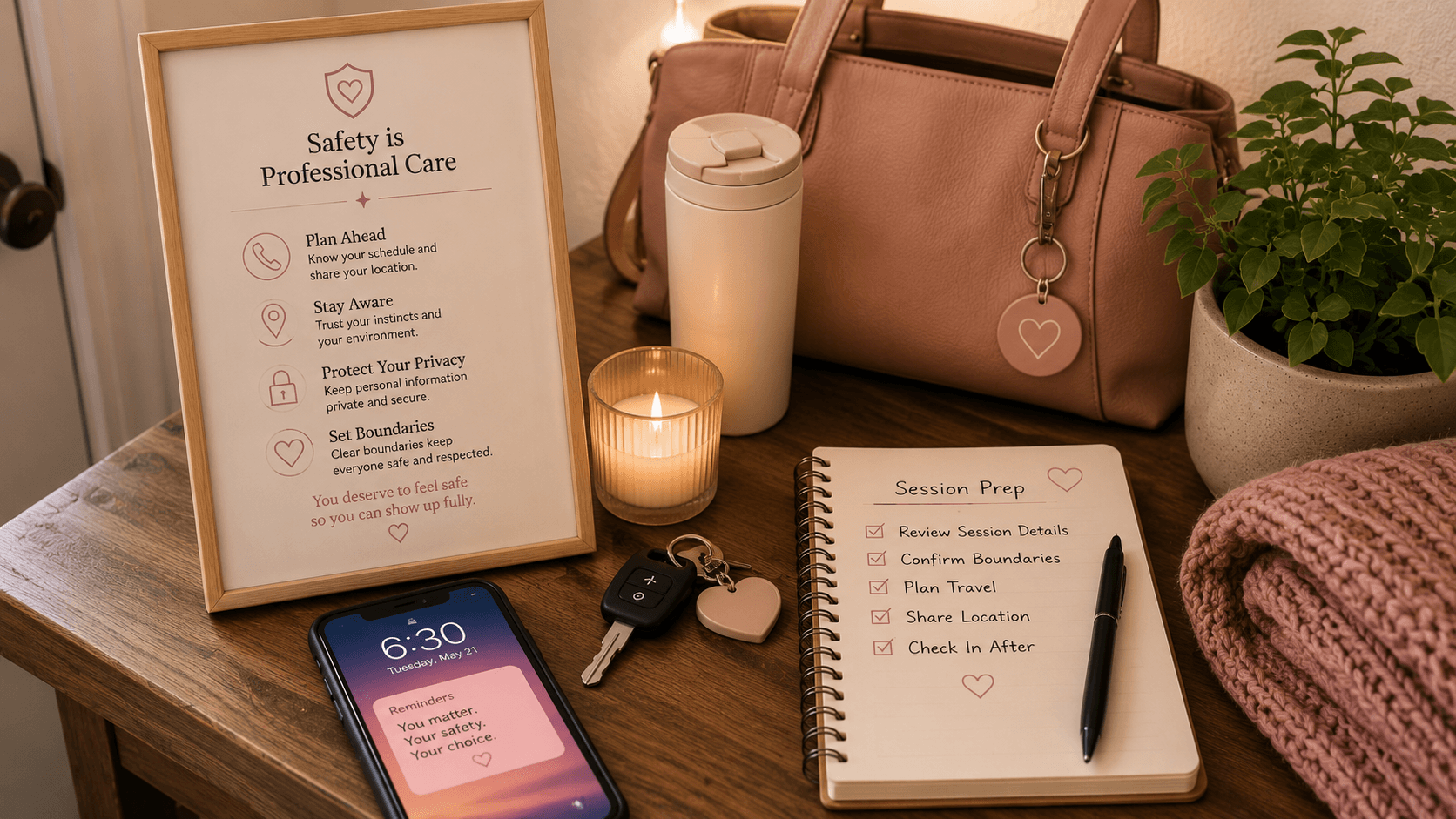
Instinct can be useful, but it should not carry the whole safety plan. Decide what information you need before booking, which requests are automatic declines, where initial meetings can occur, who knows your schedule, and what you will do if details change.
No screening method guarantees safety. A strong process creates more opportunities to notice inconsistencies, slow down, ask a direct question, or choose not to proceed.
- Consistent inquiry and screening questions
- A verified plan for time and location
- A trusted check-in or safety-contact process
- Separate public and private contact information
- Clear decline, cancellation, and ending procedures
Protect privacy while staying professional
Use business contact channels intentionally and avoid sharing a home address, private routine, unnecessary legal-name details, or live location publicly. Decide how records, identity information, messages, and payment details will be stored and when they will be deleted.
Privacy choices should also appear in your professional systems: photo backgrounds, calendar details, voicemail, social profiles, payment descriptors, and client notes can all reveal more than intended.
Respond to pressure early
Sexual requests, intoxication, identity inconsistencies, repeated boundary testing, aggressive bargaining, or last-minute location changes deserve direct attention. Pause the process, restate the requirement once when appropriate, and decline or end the interaction when the condition is not acceptable.
Education can improve preparation and judgment, but it cannot eliminate risk. Use authoritative local information and appropriately qualified professionals for legal, insurance, emergency, and jurisdiction-specific questions.
What to carry forward
- Safety is layered and planned
- Screening cannot guarantee safety
- Privacy is part of professional preparation
- You can decline or end an interaction when conditions are not acceptable